By Staff Writer@Newsforge.net
Why Meta Removes Controversial AI Feature on Instagram After Backlash
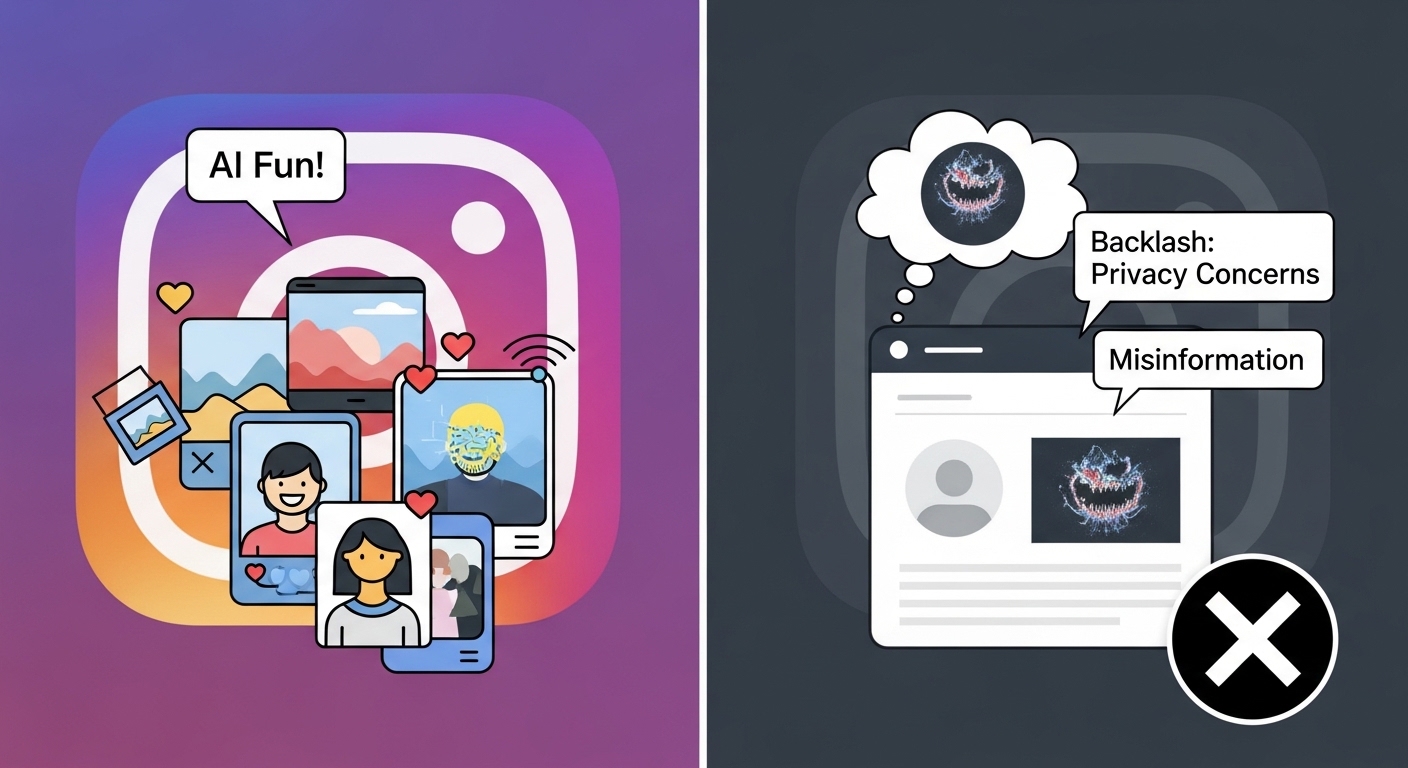
Meta, the parent company of Instagram, recently introduced an AI-powered creative tool on the popular photo-sharing platform. This feature aimed to give users new ways to experiment with their images, essentially letting AI create variations from public posts. Sounds interesting on paper, right? But the rollout hit a snag. A big one. After a wave of user criticism and privacy concerns, Meta removes controversial AI feature on Instagram after backlash. The move highlights a growing tension between technological innovation and public trust, especially when it comes to artificial intelligence and personal data.
What exactly happened? People reacted strongly. This wasn’t a minor glitch; it was a fundamental disagreement over how personal content should be used, even if it’s public. Meta acknowledged this, stating, “Our intent was to provide a useful creative tool and to give people control over whether their public content could be referenced in this way. We’ve heard the feedback that this feature missed the mark, so it’s no longer available.” That’s a pretty clear admission.
The AI Feature: What Was It, Anyway?
The core of the removed feature involved generative AI. Instagram users could access a tool that allowed an AI model to take their publicly shared photos and generate new, stylized versions or variations of them. Think of it like an advanced filter or remix tool, but with AI doing the heavy lifting. The idea was to offer more creative options directly within the app.
On the surface, this might seem like a neat addition. Many apps already offer AI-driven photo enhancements. However, this particular implementation raised eyebrows because it touched on the broader issue of AI models being trained on user-generated content. Even if your Instagram posts are set to public, there’s an expectation about how that content will be used. This new feature seemed to cross an invisible line for many.
The Root of the Backlash: Privacy, Consent, and Control
The public outcry wasn’t just about a preference for older features. It was largely driven by deeper concerns. Here are some of the main points of contention:
- Implicit Consent: While content posted publicly on Instagram is, well, public, many users felt that allowing an AI to arbitrarily create new content from their images without explicit opt-in was a step too far. Public doesn’t always mean “free for AI training and remixing.”
- Data Usage: People worry about how their data, even public data, feeds into AI models. What happens to the AI-generated images? Are they stored? How does this impact one’s digital footprint? These questions didn’t have clear, reassuring answers for everyone.
- Lack of Transparency: For some, the feature appeared without enough clear communication about its mechanics or potential implications. When new AI functionalities appear on platforms we use daily, transparency is key.
- Ethical Boundaries: This incident touches on the ethical dilemmas surrounding AI development. Who owns the AI-generated output? What if the AI misinterprets or misrepresents the original content? These aren’t simple questions.
These worries aren’t new. Conversations around data privacy and the ethical use of AI in tech are constant. This is especially true when considering how companies like Meta utilize vast amounts of user data, a topic often discussed in the context of security service and data protection.
Meta’s Swift Reversal: Acknowledging User Feedback
The fact that Meta quickly reversed course is notable. It shows that even massive tech companies are sensitive to user sentiment, particularly when it threatens trust in their platforms. The company’s statement clearly indicates they “heard the feedback” and recognized the feature “missed the mark.” This quick withdrawal demonstrates an understanding that pushing unpopular AI features without user buy-in can harm platform engagement.
It also indicates a learning curve for Meta in how it introduces AI tools to its broad user base. Integrating advanced AI into everyday applications needs careful thought, clear communication, and robust user controls. Without these, even well-intentioned features can cause significant friction.
Broader Implications for AI in Social Media
This episode serves as a powerful reminder of the delicate balance required when integrating AI into user-centric platforms. Companies are racing to implement AI, from enhancing user experience to generating content, as seen with OpenAI’s GPT models being preferred for Microsoft Copilot 365. But the Instagram incident underscores that innovation must go hand-in-hand with respect for user autonomy and privacy.
Think about it: social media platforms thrive on user trust. If users feel their content is being used in ways they don’t understand or approve of, they might disengage. This isn’t just about a single feature; it’s about the future relationship between users and the AI powering their digital lives. We’ve seen AI make its way into many aspects of life, even into sports analysis, with World Cup teams in a race for AI dominance. But when it comes to personal content, the stakes feel higher.
Lessons Learned for Tech Giants
What can we take from this? For one, user feedback remains incredibly powerful. Social media companies cannot simply roll out new technologies and expect universal acceptance, especially when those technologies interact with personal data in novel ways. Clear communication before, during, and after a rollout is essential.
Another lesson is the importance of user control. While Meta mentioned giving users control, the initial implementation evidently didn’t meet user expectations for that control. Future AI features will need intuitive, obvious, and granular settings that put users firmly in the driver’s seat of their own content’s use.
Looking Ahead: The Future of AI on Instagram and Beyond
So, where does Meta go from here? It’s unlikely they’ll stop experimenting with AI. The potential for AI to enhance creativity and connection on platforms like Instagram is huge. However, expect a more cautious approach. Future AI features will probably come with clearer explanations, more explicit consent mechanisms, and perhaps an opt-in model rather than an implied one.
This incident also sets a precedent. Other social media platforms considering similar AI integrations will undoubtedly observe Meta’s experience. User expectations regarding AI and privacy are only getting higher, and companies that listen and adapt will be the ones that maintain long-term user loyalty. This is a critical discussion, much like the one around Meta removes controversial AI feature on Instagram after backlash, which continues to shape how we interact with technology.
In conclusion, the decision by Meta to remove the controversial AI feature on Instagram after backlash serves as a stark reminder: technology advances quickly, but user trust is built slowly and can be lost in an instant. Respect for privacy and clear communication aren’t just good practices; they’re essential for sustainable innovation in the age of AI.