By Staff Writer@Newsforge.net
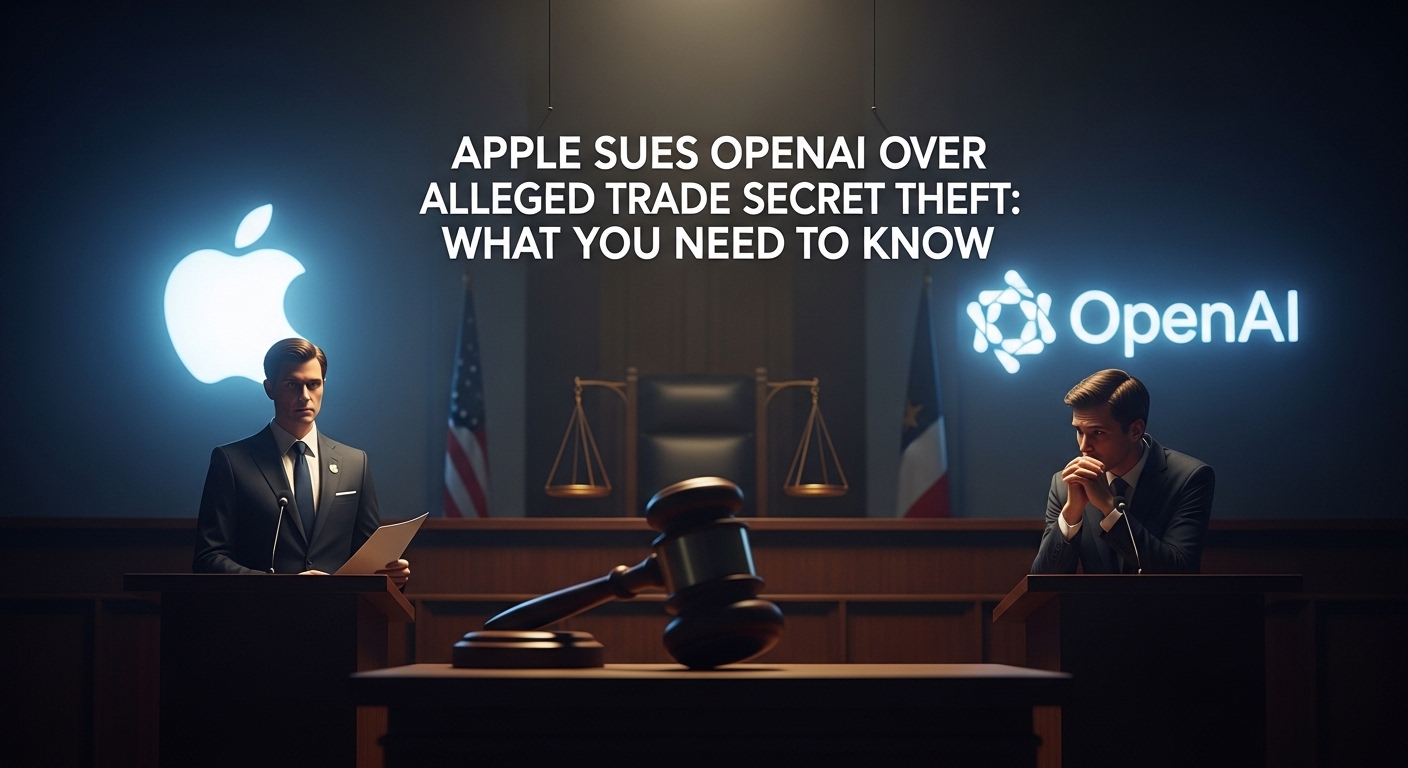
The tech world is buzzing with major news: recent reports confirm that Apple sues OpenAI over alleged trade secret theft. This isn’t just a minor disagreement between two tech giants; it’s a significant legal challenge from one of the world’s most valuable companies against a leading force in artificial intelligence. This lawsuit underscores the fierce competition defining the AI landscape, where proprietary information often holds immense value and is fiercely protected.
Apple alleges that OpenAI, the company behind the popular ChatGPT, misappropriated sensitive intellectual property. The core of Apple’s complaint suggests this misconduct was reportedly directed by OpenAI’s senior leadership, including a long-time former Apple employee. This detail immediately raises serious questions about corporate ethics, the boundaries of innovation, and the movement of top talent between rival firms. For many watching the industry, a direct confrontation where Apple sues OpenAI over alleged trade secret theft marks a pivotal moment.
Understanding Apple’s Allegations Against OpenAI
At its heart, Apple’s lawsuit centers on what it claims are stolen trade secrets. What does that mean exactly in the context of advanced technology? Trade secrets can encompass a wide range of confidential information: unique algorithms, specific software code, proprietary design schematics, confidential business strategies, and even specific data sets or methodologies used for training AI models. These are the very things that give companies a competitive edge in the rapidly evolving artificial intelligence market.
The specific nature of the alleged trade secrets has not been fully disclosed publicly, but the involvement of a former Apple employee now reportedly in a senior role at OpenAI certainly adds a layer of complexity to the accusation. Such situations often lead to claims of using insider knowledge for a competitor’s gain. It’s a storyline that has played out countless times in Silicon Valley, but with the accelerating pace and strategic importance of AI development, the stakes feel higher than ever before. This is precisely why Apple is taking such a firm stance, alleging that this constitutes trade secret theft rather than simple competitive innovation.
The Broader Context: Intense AI Competition
This lawsuit isn’t happening in a vacuum. Companies across the globe are in a massive scramble to develop and implement cutting-edge AI technologies. Think about it: almost every major player, from nimble startups to colossal established giants, is pouring immense resources into this field. This intense rivalry means that gaining any advantage, whether technological, strategic, or even talent-related, can be incredibly valuable and potentially disruptive to the market.
Apple itself has been making significant, though often more quietly executed, strides in AI development. OpenAI, on the other hand, has garnered massive public attention and investment with its groundbreaking generative AI models. The timing of this lawsuit suggests Apple is serious about protecting its innovations as it ramps up its own AI initiatives. The tech community is watching closely to see how this plays out, especially given the ongoing race for AI dominance across various sectors, not just limited to direct tech competitors. When a behemoth like Apple comes forward saying Apple sues OpenAI over alleged trade secret theft, it signals a significant escalation in this race.
The Significance of Former Employee Involvement
One of the more contentious aspects of the complaint, as reported by various sources, is the alleged involvement of a specific former Apple employee. When key personnel transition between competing companies, particularly into senior leadership or highly sensitive development roles, concerns about intellectual property naturally escalate. Non-disclosure agreements (NDAs) and non-compete clauses are ubiquitous in the tech industry precisely for this reason. However, proving that an individual knowingly or unknowingly transferred proprietary information, or that a new employer actively solicited such information, can be incredibly difficult in a court of law.
This particular detail underscores a persistent, thorny challenge for innovation-driven companies: how do you effectively protect your creations and methodologies while still allowing for the natural and necessary flow of talent in a dynamic industry? It’s a delicate balance. Apple’s decision to pursue this weighty legal action indicates they firmly believe that line was not just blurred, but unequivocally crossed. This specific accusation is what elevates the dispute from a general competitive struggle to a direct claim that Apple sues OpenAI over alleged trade secret theft.
Industry-Wide Implications and OpenAI’s Position
For OpenAI, a lawsuit of this magnitude from a company like Apple represents a significant operational and reputational challenge. Beyond the potential financial penalties, a ruling against OpenAI could considerably tarnish its standing and potentially impact its ongoing collaborations. We’ve already seen how OpenAI’s relationships with other giants like Microsoft are subject to intense scrutiny and rapid shifts. Any legal findings against them could negatively influence investor confidence, deter future partnerships, or even necessitate significant adjustments to product development strategies.
More broadly, this case could establish crucial precedents for the entire artificial intelligence industry. As AI models continue to grow in sophistication and economic value, disputes over proprietary data, unique algorithms, and advanced training methods are only going to become more frequent and more complex. This lawsuit could help clarify the legal boundaries of intellectual property in a field where innovation often builds upon existing ideas and sometimes openly available datasets. It certainly highlights the continuous need for robust security service protocols and stringent IP protection within all organizations, especially those operating at the cutting edge of technological advancement. Furthermore, how companies handle such high-stakes legal battles, especially regarding alleged misconduct, can significantly impact public trust, much like how Meta removed a controversial AI feature on Instagram after backlash. The fallout from this case, where Apple sues OpenAI over alleged trade secret theft, could shape how many companies operate.
Looking Ahead: The Path of the Lawsuit
Legal battles of this nature are often lengthy, complex, and resource-intensive. They typically involve extensive discovery processes, detailed expert testimony, and potentially years of intense litigation. Possible outcomes range broadly: from a swift settlement agreement, where both parties negotiate a resolution outside of court, to a full-blown trial that could result in significant monetary damages for Apple or even injunctions against OpenAI. An injunction might, for example, restrict OpenAI from utilizing certain technologies, developing particular features, or even engaging in specific hiring practices.
The tech press, legal experts, and industry observers will be watching for several key developments. First and foremost, the specific and compelling evidence Apple presents to substantiate its claims of trade secret theft. Second, OpenAI’s robust defense strategy and how they plan to counter these serious allegations. And finally, any signals from the court about how existing intellectual property laws will be interpreted and applied in the rapidly evolving realm of artificial intelligence. This case is a big one. It has the potential to redefine how companies protect their digital innovations for decades to come, far beyond just the direct impact of Apple’s decision to sue OpenAI over alleged trade secret theft.
Protecting Innovation in the AI Era
Ultimately, when Apple sues OpenAI over alleged trade secret theft, it sends a powerful and unmistakable message across the global tech industry: intellectual property is absolutely paramount. Companies invest staggering sums – billions into research, development, and groundbreaking innovation. Protecting those colossal investments is not just good business; it’s critical for fostering continued advancement. This dispute isn’t merely about two corporate entities; it’s about establishing clear rules of engagement in a highly competitive market where the next big breakthrough could genuinely redefine entire industries and change daily life for millions.
We’ve certainly seen similar high-profile cases in the past, though perhaps none quite as directly intertwined with the bleeding edge of artificial intelligence development. This specific situation serves as a stark reminder that even as technology progresses at lightning speed, the fundamental principles of business ethics, fair competition, and robust legal protection remain steadfast and incredibly relevant. This high-stakes legal showdown will undoubtedly influence future collaborations, strategic hiring practices, and the overall trajectory of AI companies globally. Keep a close eye on this unfolding story. The outcome might just fundamentally change how we collectively think about intellectual property in the age of artificial intelligence.